
Harnessing ADHD Intuition in Children for Growth

In 5th grade, I had one of my favourite teachers, Mr. B (not his real name). He was an incredible educator who truly engaged us—especially through music. I still remember all the lyrics to “If I Had a Hammer”, and whenever I hear it, I’m instantly transported back to that class. That’s no small thing, considering how few teachers I remember from school. Another vivid memory from that class is being in a portable, and—more curiously—believing that Mr. B was having an affair with one of the parent volunteers. I told my mom about it at the time, and she didn’t believe me.

Looking back, this memory often makes me reflect on something I’ve noticed in my work and in myself: people with ADHD often have an uncanny ability to pick up on things others don’t. They can sense when something’s off—when someone’s lying, being fake, or not acting with integrity. While this connection hasn’t been widely studied scientifically, my years of experience as a clinician —working with hundreds of families and children with ADHD—have shown me that this kind of intuition is remarkably common. Call it a gift or a curse, but it’s real.

ADHD has many contradictions and this is certainly one of them. We can be entirely oblivious to what’s going on around us—lost in thought, hyper-focused, or mentally checked out—but at other times be strikingly attuned. There are a few theories that attempt to explain this. Anthropological perspectives suggest that people with ADHD may be descendants of hunters and warriors—roles that required hyper-awareness and rapid environmental scanning. Another theory ties it to trauma: when you’ve faced repeated negative feedback in a world built for neurotypicals, you become hyper-alert to other people as a form of self-protection.

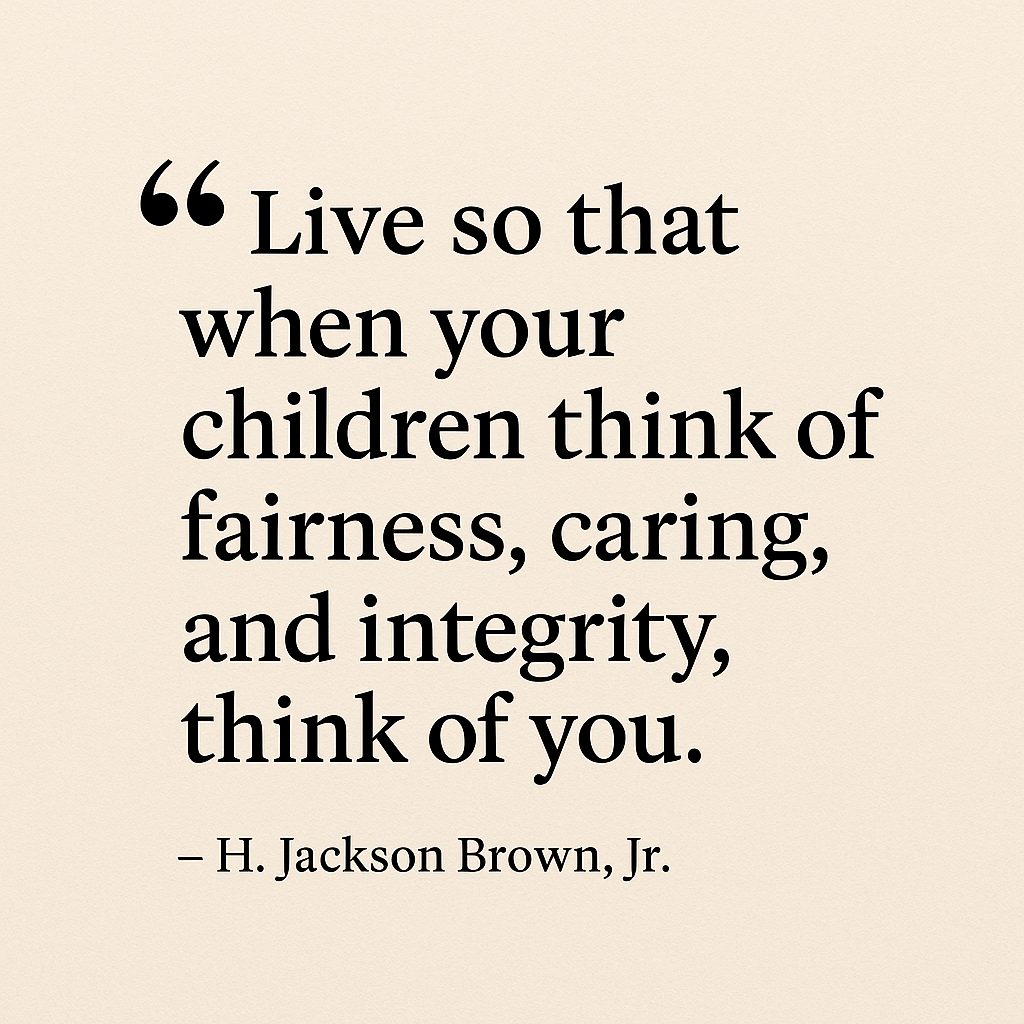
Integrity, then, becomes a crucial issue for those with ADHD. We are highly sensitive to inauthenticity and feel deep discomfort when people’s actions don’t align with their words. For children with ADHD, this often leads to trouble. They may call out teachers, coaches, or peers when something feels “off,” which can be misinterpreted as disrespect or defiance—especially in a society that often prioritizes obedience over honesty. Their bluntness and need for alignment between inner truth and outer action can strain relationships, particularly with adults who are uncomfortable being questioned or exposed.

In our home, my children—growing up in a neurodiverse household—are encouraged to listen to their instincts. We support them in exploring their feelings about the people in their lives, whether it’s a friend, teacher, or coach. This doesn’t mean they’re allowed to be rude, but it does mean we validate their perceptions. As a result, they’ve become confident, outspoken kids who are learning to trust their instincts while also learning when and how to temper their honesty to avoid unnecessary harm.

The real learning, though, isn’t for the children—it’s for us as adults. When a child or teen resists us, questions us, or shuts down, it’s worth asking ourselves: Are my actions aligned with my words? Children with ADHD can feel that misalignment instinctively. The adults who handle this best are the ones who are already living in integrity—they’re open, grounded, and willing to have those difficult conversations. The ones who react defensively? They’re often the ones who feel exposed.

And, in the end? I was right about Mr. B. Years later, my mom told me that he was having an affair with the parent volunteer.

Sometimes, kids with ADHD just know.
Navigating Life Without a Script: A Journey of Self-Discovery

Looking back, I remember constantly feeling like everyone else had received some kind of manual for life—and I’d somehow missed it. It was as if teachers, parents, and coaches had whispered instructions to everyone but me. I’d blame it on my daydreaming, which I did constantly. I’d sit through lessons lost in thought, choreographing dances in my head, creating stories, planning projects. On the outside, I appeared to be listening. But inside, I was in another world—bored, disconnected, and silently struggling.

I didn’t talk about it. Somehow, I knew not to. I couldn’t quite explain it anyway.

Years later, in graduate school, I discovered the work of sociologist Erving Goffman, who wrote about the “performance of everyday life.” Finally—an explanation. Everyone, Goffman said, is performing: as children, friends, teammates, students. Life is a stage, and we’re all playing roles. But even as I absorbed this insight, something still didn’t sit right. If everyone was performing, how did they know their lines?

It wasn’t until my late 30s—after being diagnosed with ADHD-Combined type—that things really began to click. I dove headfirst into everything ADHD. That’s when I found others describing the exact feeling I’d had for decades: like there was a script everyone else had been handed, and we just… hadn’t.

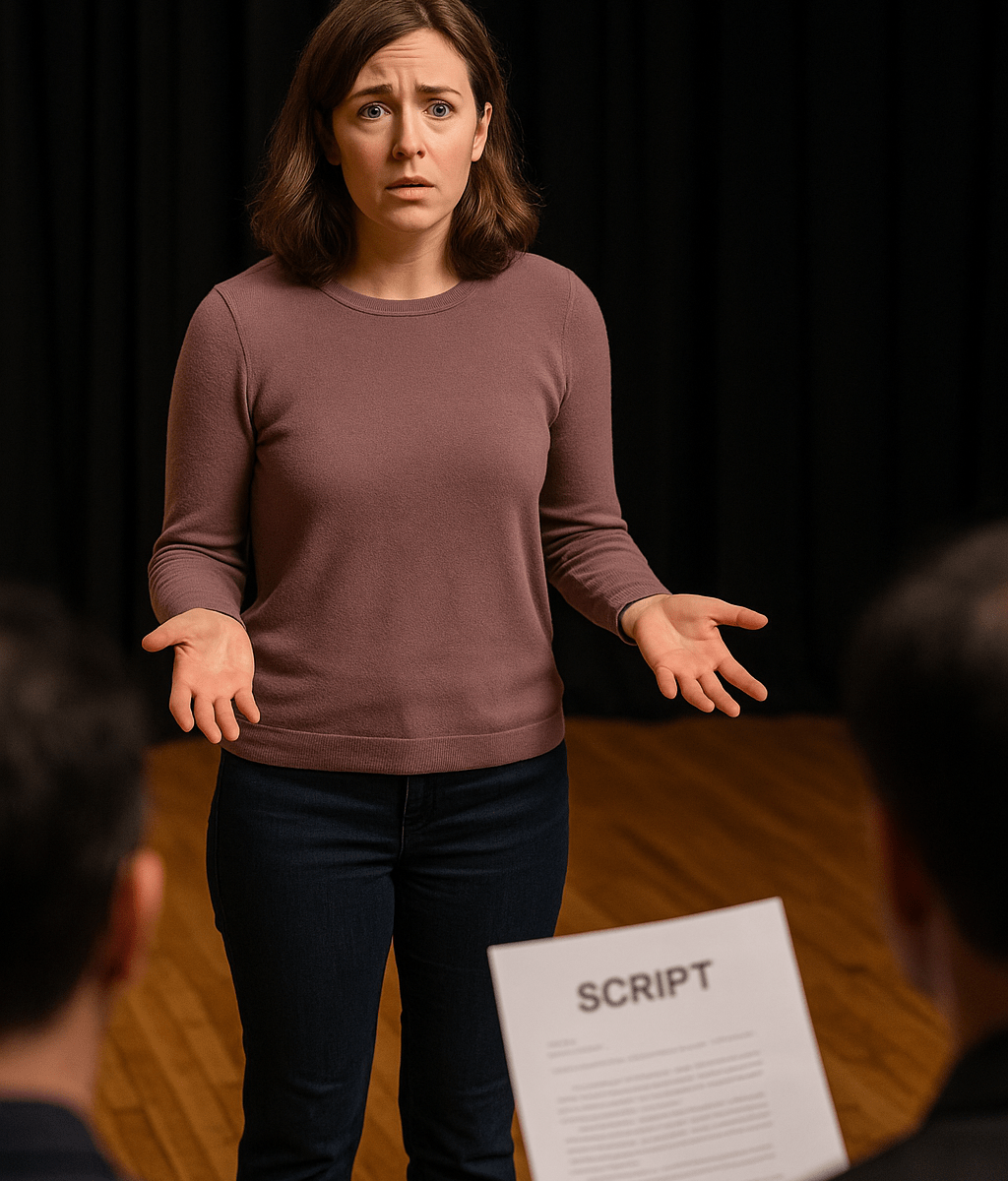
I imagine it like this: a woman walks into an audition, and everyone expects her to recite lines from a script. Only—she was never given one.

That image explained so much. When I got to university, it seemed like everyone already knew about academic journal articles. I figured it was because I was the first in my family to attend university. But then I met others with similar backgrounds who did know. Was it socio-economic? Was it ADHD? I still can’t say for sure. But I know one thing: I didn’t have the script, so I faked it until I figured it out.

I have dozens of stories like this—moments where I masked confusion or mimicked others, just trying to fit in.

Through my work, research, and especially parenting neurodivergent children, I’ve come to understand that much of what I experienced wasn’t a personal failure—it was a disabling environment. The systems I moved through were designed for neurotypical brains and nervous systems. That’s not to say neurotypicals don’t perform or fake it, too. But the key difference? They’re performing from a script written with them in mind.

Take our school system. It expects children to sit still, absorb information passively, and produce it on demand—through worksheets, tests, and timed exams. For many neurodiverse learners, that’s a recipe for struggle. They often thrive with hands-on, multisensory learning—by moving, creating, experimenting, and processing on their own timeline. But instead of embracing these strengths, many schools label them as distracted, defiant, or disorganized.

It was in high school that I began to uncover an approach that worked for me. I chose projects that aligned with my interests to stay engaged. I avoided classes based heavily on memorization, knowing my working memory wouldn’t serve me well there. Without realizing it, I was accommodating my neurodiversity. I was leaning into my strengths—curiosity, creativity, and a deep love for learning.

And that’s the shift I want to emphasize.

When neurodivergent people understand how they think, feel, and learn best, they stop trying to cram themselves into someone else’s mold. They start building their own toolkit, their own pace, and yes—even their own script.

So if you’ve ever felt like you missed the instructions, like you’re always one step behind, like you’re pretending to “get it”—know that you’re not broken. You’re navigating a world that wasn’t built with you in mind.

But the beautiful part? You don’t have to keep faking it. You can start writing your own lines.

Raising a Different Kind of Baby: Lessons from the Start

At the time of my son’s birth, what I knew about babies came from being an older sister to a brother six years younger, the babysitting I’d done as a teenager, and my co-op and later part-time job in a daycare. This meant I didn’t really know much about newborns. Still, from what I did know—and what I had read—they were supposed to sleep after birth, worn out from the trials and tribulations of the birthing process. At least, that’s what I thought…

On November 1, 2009, I gave birth to my son, Wesley. He was 10 days late. My water had to be broken in the hospital. After 12 hours of labor, I was only 2 cm dilated, and Wesley was in distress. I was losing oxygen and shaking. I was rushed in for an emergency c-section.

That night, after all the commotion of his birth, Wesley lay beside me—wide awake—staring straight up at the ceiling. I remember thinking, Aren’t babies supposed to sleep after birth? Even just for a few hours? What I didn’t know in that moment, and only realize looking back, is that this was my first true introduction to life with Wesley.

Wesley was not like the other children I had been around. He wasn’t difficult—just different. Different in a way that was unfamiliar to me.

He would cry when I wasn’t close, but he hated being swaddled and didn’t want to be held too tightly. I would fall asleep with him face to face, his little hand wrapped around my finger, our foreheads touching. He’d sleep for short stretches, then wake to nurse, and take ages to fall back asleep. He loved being outside in the stroller—or walking around the mall. He was happiest around others and always moving. He seemed to carry this restless energy, like he had already been here in a past life and was just waiting for his body to catch up so he could get going.

Wesley has been my greatest teacher.

That’s not to say I haven’t learned from my other children—I have, and I continue to. But Wesley, as my first, is the reason I began this journey: learning and growing as a neurodiverse parent raising neurodiverse children. He’s also the reason I became a professional who now helps other women and their children find their way as they parent their highly sensitive, spirited, or neurodiverse child.

These are the kids whose sparks we want to protect—their energy, their determination. But they often struggle in our modern world. Traditional parenting didn’t teach us how to nurture their strengths. I had to learn from others, learn on my own, and, more often than not, trust my instincts—especially when the advice of others just didn’t fit.

I’m so incredibly grateful for Wesley and everything he’s taught me. I often say to parents whose children are challenging them in ways that make them take a hard look at themselves, “This child is your greatest teacher.”I say that because of Wesley—because of us—because of our story.