Navigating Transitions: Understanding Sensitive Kids

Transitions are hard. Whether small, like sitting down for a meal after playing a game, or bigger, like going from home to work or school, or the large but infrequent ones, like starting a new school year with a new teacher or even going to a new school.

When I was younger, I didn’t think much about transitions. I was usually excited for them, even while being anxious. I liked new places, new experiences. But having three children who each struggled with transition in different ways made me think about them more.

My oldest son enjoyed new places and new experiences, much like me. His trouble was more with transitioning from something enjoyable to something less enjoyable, like stopping a game to eat. My daughter was the one who challenged my own experience of transitions and made me rethink how I responded to transitions and how to set her up for success.

Maddy would get excited for new things, but excitement always came with a large wave of anxiety close behind. If the place was somewhat familiar, like school, she would go on the first day after weeks of anxiety focusing on what she didn’t know: what the teacher was like, whether friends were in her class, whether the work would be hard. She was excited and anxious about that first day, all at once. What happened after wasn’t what I expected. Once the first day or two of school was over, she would often melt down. She’d say she hated her teacher, her class, the people. At first, like the mother I’ve worked to be, I trusted her experience. I even believed her, sometimes, that it was terrible. Sometimes there were legitimate issues with teachers or friends, and we dealt with those as they came. But over time I’ve come to realize that Maddy really struggles with change, even when she’s excited about it going in. She gets very negative about a new teacher. She doesn’t like her schedule changing, or something being canceled because of unforeseen circumstances. I’ve watched this pattern for years, and last year I finally learned my lesson on how to deal with it.

Last year, Maddy had a student teacher she said was mean to her, didn’t like her, and didn’t consider her dyslexia or ADHD when he made comments or when she asked for help. At first, I took what she said at face value and told her I’d follow up with the teacher supervising him. One of Maddy’s main concerns was the pressure to finish a group project in a short window, while also knowing she had a dance competition that same week and would miss school. When I asked if she’d explained this to the student teacher, she said she had, and that he didn’t care.

A little context: Maddy, like a lot of neurodivergent girls, struggles with perfectionism. It’s something she’s been working on, so the thought that she might not finish a project on time, especially with friends relying on her as part of their group, was very stressful. She was extremely upset. I emailed the class teacher to ask her to clarify the deadline and to explain the conflict with dance. The teacher assured me Maddy’s group would have more time and that it would be okay. I told Maddy, and she moved forward with the project, apprehensive and anxious.

Weeks later, my son Wesley came home from a work event, “Your student teacher is one of my good colleagues at the shows. He’s a great guy.” Maddy said, “Yeah, I know, I like him now.” I stood there, confused. When I asked what changed her mind, she said, “He’s nice, and he’s good at teaching me math.” Wesley gave his sister a bit of a talk, pointing out how hard she’d been on this student teacher. Maddy wasn’t fazed at all.

I learned something in that moment. I was proud of myself for only asking the teacher to clarify the due date and address the absence and not going further than that. But I’d still spent real time and energy upset that this student teacher was treating my daughter “poorly.” I realized then that this is part of the pattern: once Maddy gets used to the new thing, feels like she has a voice, and builds a relationship, she regulates, and things change.

This school year, a similar thing happened after the first day. But instead of jumping in or worrying about whether she’d landed with a teacher who’d make her hate school or fail to support her, I took a beat. I gave her hugs that night as she cried. Her friend from class came over and hung out. Maddy was self-aware enough to say, “I know I hate change, but this is different…” That night, when she was upset and searching for ways to “fix it,” I told her I thought she just needed to feel her feelings, have a big cuddle, and go to sleep. That she wasn’t in a space for solutions right now, and that was fine. The second day, she came home and said things were better, and that she hoped they’d keep getting better.

What I’ve learned is how easily I can get wrapped up in my children’s anxiety especially as a highly sensitive person myself. I feel what Maddy feels. However, I have to step away emotionally to remember this is hers, not mine, and I need to stay out of the rabbit hole of my own anxiety alongside her. I need to be the safe space she can talk to, to validate that these transitions are genuinely hard for her, and to understand that new places, people, and environments can be difficult for someone highly sensitive and neurodivergent. I can help her when she needs it. But I also need to give her time to adjust, to get comfortable, to build relationships, and to regulate my own anxiety so I can help her.
Understanding Your Spirited Child: A Turning Point

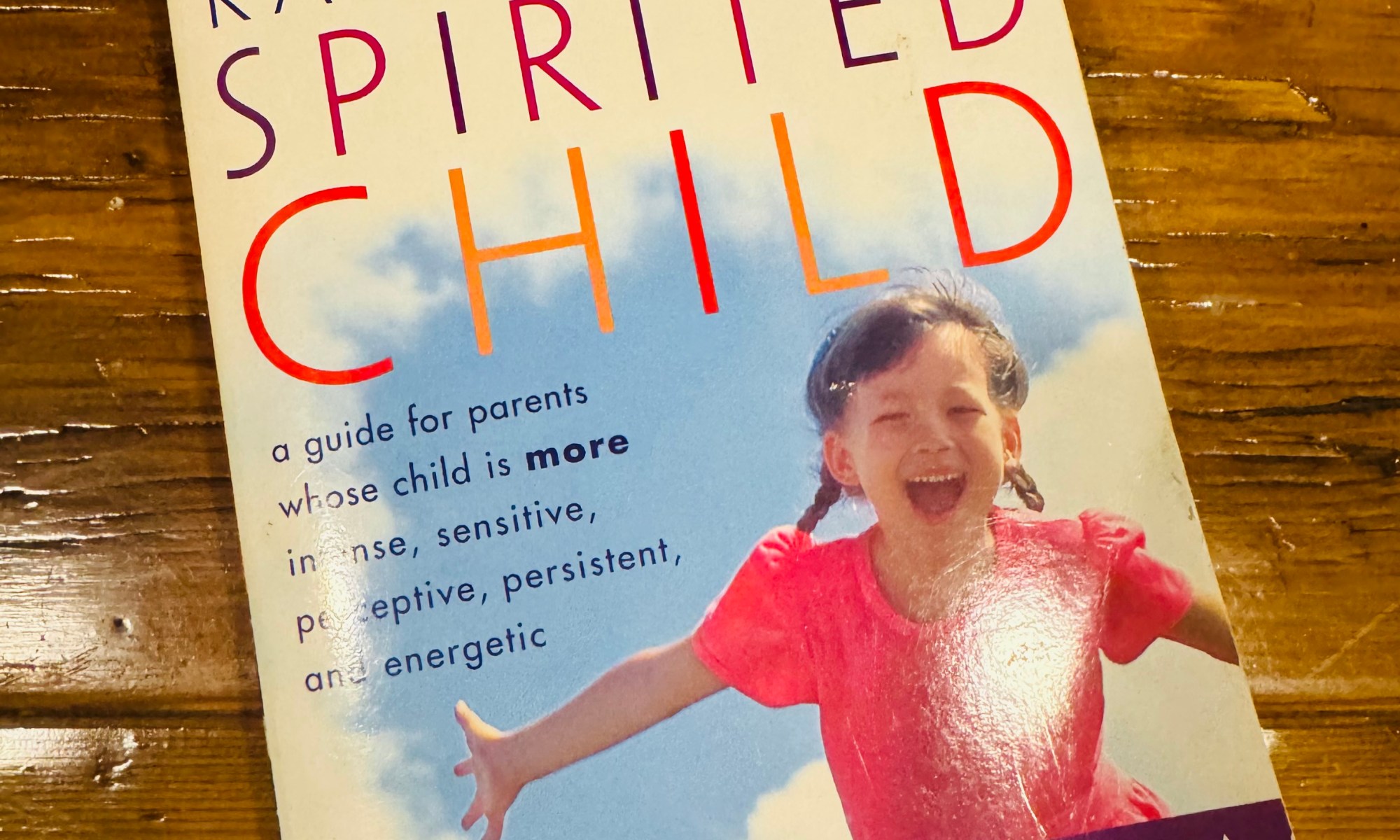
Yesterday, I found myself sitting across from my long-time play therapy supervisor—one of the most respected play therapists in Canada. At the beginning of our meeting that focuses on supervision, she offered me a few books she was no longer using. The first one she passed me was Raising Your Spirited Child. I looked at her and said, “This is a full circle moment.” Let me explain why.

When Wesley was an infant and toddler, I knew that parenting him would be different. I often felt judged by others, like no one truly understood what I was going through. I was constantly exhausted and on high alert, trying to meet the needs of my highly sensitive, deeply feeling child.

While most people around me did not get what I was feeling or experiencing, my mother-in-law was more understanding. For her, Wesley’s energy seemed normal. Her three boys were very similar. And while that was somewhat comforting, it also made me feel worse for struggling.

To give you a picture—Wesley didn’t walk, he ran. He didn’t sit still; he was in constant motion. He craved human connection, and as a young child, that person was always me. Sleep was a battle—he took forever to fall asleep and would wake up incredibly early.

If I had been an extroverted, sensory-seeking parent who thrived on social interaction and stimulation, this kind of intensity might have felt like a perfect match. But I wasn’t. I am the kind of person that often longs for peace and quiet. I get overwhelmed by noise and crowds. I love people, but I also deeply need my alone time. Back then, undiagnosed and untreated for ADHD, I was tired—drained.

And I was also doing my PhD.

The days when I was with Wesley for long stretches were particularly difficult—not because I didn’t love being with him, but because it was just the two of us, and he thrived in highly social environments. Yet there were very few social spaces that could accommodate his energy level at that age. The mismatch between what he needed and what I could offer felt heavy, and isolating.

Even through the exhaustion, I knew my son was a gift. His intensity, his passion, his emotions—these were qualities that would one day serve him. But in those early years, they were hard on me.

As someone raised in the pre-internet era, books were always where I turned to understand the world. I devoured parenting books, but nothing seemed to fit. Until one day, I found Raising Your Spirited Child. I remember reading it and weeping. For the first time, someone saw me. Someone saw him. Not in a negative light, but through a lens that highlighted his strengths, not just the challenges.

That book was a turning point. It validated what I had always known in my gut: my son didn’t need fixing—he needed understanding. And so, did I. That moment sparked a fire in me to learn more about the diversity of children’s brains, nervous systems, temperaments, and development. It was the beginning of a new path.

So, when my supervisor—now guiding me on my journey to becoming a play therapy supervisor—handed me that very same book yesterday, I paused. It was one of those quiet, powerful nudges from the universe.

A reminder: You’re on the right path. This work is for you.

Understanding Dyslexia: A Mother’s Journey with Her Daughter

As a toddler, my daughter Madison loved books. She would sit in her rocking chair and “read” to her dolls, to our dog, or even just to herself—telling elaborate stories based on the pictures. I thought for sure she would become an avid reader. She loved storytelling and seemed captivated by every book she picked up. But as she started learning her letters and sight words, things began to shift. Madison stopped picking up books. She no longer wanted to read, and I couldn’t understand why.

In Kindergarten, she’d bring books home and ask us to read them first. Then, she would “read” them back to us—but I quickly realized she was memorizing the stories, not decoding the words. If I pointed to a word out of context, she couldn’t recognize it. We practiced sight words; she’d seem to get them one day, only to forget them the next. She knew the sounds that letters made but couldn’t blend them to read even simple words. When asked to spell, she’d write what she heard—but unlike most children, this didn’t fade with time. Her challenges persisted.

This wasn’t something I understood well. I knew ADHD—I had personal experience with it, however reading had been my childhood escape. I devoured books, reading under the covers until my eyes burned. Reading was never hard for me. But Madison’s experience mirrored that of my husband and his brother, both of whom had struggled with reading and writing.

When Madison had her psychoeducational assessment, she was diagnosed with ADHD-C and identified as being in the very low average range for reading and writing—second percentile. Still, there was no diagnosis related to her reading and writing struggles. The psychologist attributed her difficulties to inattentiveness from ADHD and pandemic-related disruptions in schooling. But I knew this wasn’t the case. Madison could focus deeply on art and storytelling. We read together every night, had a home full of books, and practiced regularly. And while my older son also had ADHD, he had no issues learning to read. Madison’s challenges didn’t fit the explanation we were given.

After treating her ADHD, nothing changed with reading. She continued to mask at school, and her teachers didn’t raise concerns. Finally, in Grade 3, after I advocated for Madison to be reassessed, she was diagnosed with a learning disability in reading and writing.

But no one said the word dyslexia.

In Ontario, psychologists and schools often avoid using the term dyslexia in assessments because it’s not a diagnostic label recognized in the DSM-5. Instead, terms like “Specific Learning Disorder with impairment in reading” are used—broad, clinical phrases that don’t provide families with clarity or direction. Schools have historically followed this language, avoiding specific subtypes like dyslexia. This practice has left many families—like ours—confused and unsupported.

Advocates across Ontario are now pushing for change. They’re calling for early screening, evidence-based instruction, teacher training, and consistent use of the word dyslexia. Backed by the Ontario Human Rights Commission’s Right to Read inquiry, they want a system that not only identifies dyslexia early but also responds to it with timely, effective support. Because without using the word, many parents don’t know where to begin—and more importantly, children don’t understand why they’re struggling.

In my parenting and in my professional life, I use the word dyslexia. Naming it matters. It helps guide the right supports and, just as importantly, it helps highlight the strengths that come with dyslexic thinking—skills like pattern recognition, storytelling, logical reasoning, creative problem-solving, and strong visual-spatial awareness. In fact, workplaces like NASA are now actively recruiting dyslexic thinkers for their unique abilities. But if we don’t name it, parents can’t recognize these strengths in their kids. Instead, they’re left worrying about their child’s future, wondering if their disability will leave them with limited choices for their futures.

Today, Madison works with an incredible dyslexic tutor who has training in Orton Gillingham and Barton systems that are proven approaches to support dyslexic readers. This experience and learning has helped her build confidence and skills in reading and writing. When I ask Madison about those early years, she tells me that in Grade 1 and 2, she felt “dumb.” That was the heartbreaking part—watching my bright, creative child’s self-esteem slowly erode while educators insisted she was doing “just fine” and that kids all learn to read at different paces. I was shamed for asking questions—asked if we read at home, or if she had access to enough books. I can’t help but think of the many families who don’t have a background in neurodiversity or education, and how easily they’re dismissed when they bravely raise concerns.

Madison now knows she’s dyslexic. She understands her challenges and, more importantly, her strengths. That clarity and confidence wouldn’t have been possible without the right label—and without the work we’ve done to help her own her story. Using the word dyslexia helped our family find the right tools, the right people, and the right perspective. Every child deserves that same chance.

Grief and Love: Navigating Loss on April’s Birthday

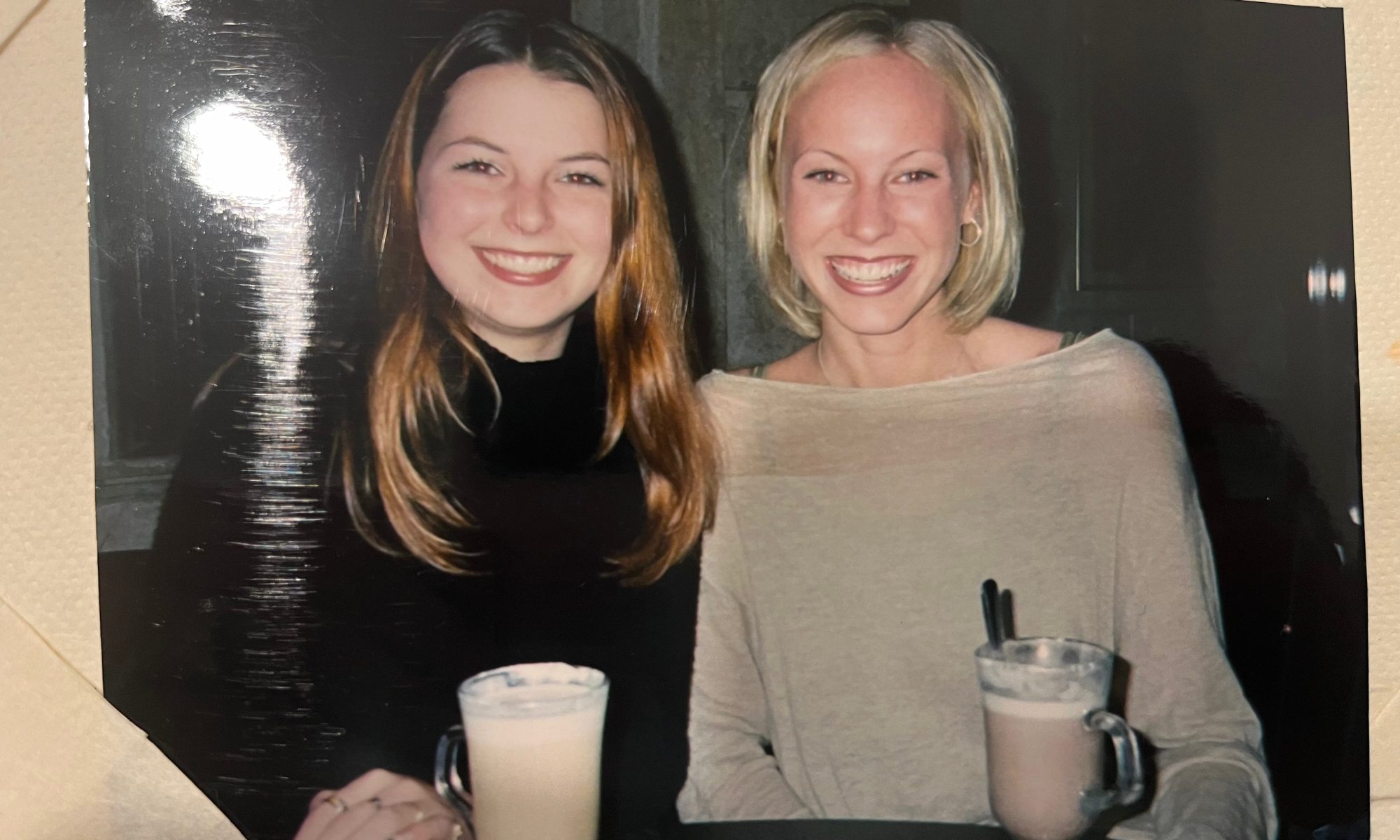
Today is my best friend April’s birthday. She was supposed to be 44 years old.

For as long as I can remember, I celebrated April’s birthday with her. No one could ever surprise April—she didn’t really like surprises. She told her family and friends exactly what she wanted, and she always had a plan for how she wanted to celebrate. I now admire that quality deeply. April always knew what she wanted—whether it was for her birthday, her career, or her family. She had a vision for her life and worked tirelessly to bring it to reality.

April’s 43rd birthday was the last time I would wish her a happy birthday. I called her that day, as I always did. She told me she was going out for dinner with her husband. She was at the salon getting highlights. She also mentioned she’d been having trouble eating certain foods and wasn’t sure how much she’d be able to eat that evening. She sent me pictures of their beautiful new home in the Bay Area, where she would live with her husband and their soon-to-be three-year-old son.

One month later, April was diagnosed with late-stage pancreatic cancer—the same illness that took my dad at 65, just a few years earlier.

Grief is different for everyone. It can shake you to your core, distort your beliefs, and make you reach for anything that feels stable. For me, grief comes in waves—some massive, some small—but each brings a deep, somatic pain. My already foggy, unfocused brain becomes even more clouded. I freeze. I go numb. Other times, I feel the ache physically—my body holding memories, replaying conversations on a loop. I question what I did or didn’t do, what I could have done differently. I feel like I wasn’t enough.

I want to reach out for support, but then I talk myself out of it—afraid I’ll be too much. I crave connection while wanting to disappear. These contradictions, already familiar from my life with ADHD, feel even more intense in grief.

Joan Didion, in The Year of Magical Thinking, writes about the year following her husband’s death. Her words resonate deeply with me. Because April lived in California, it’s strangely easy to “forget” that she’s gone. If you’ve never lost someone close, that may sound odd—but Didion captures it perfectly: the mind protects us from fully absorbing the reality of loss.

Almost every week, I see or hear something and think, I need to tell April about this. And then I remember. And the wave comes.

As my children grow, they ask questions about my own childhood—and almost every story involves April. I tell them about the two of us watching MuchMusic on our lunch breaks from school, hanging out in her basement listening to music, our proms and semi-formals, traveling to Quebec, Cuba, Mexico, living in Asia, moving into our dorm at university, decorating our student house—our rooms always side by side. Boyfriends, heartbreaks, late-night talks. So much of my early life was lived with her by my side.

And now, joy and grief arrive together. I laugh at a memory and cry at its absence.

Writing has often been my way through, and lately, my creative heart keeps returning to April. I write to her. I write about her. And somehow, in those words, I feel close to her again.

Love doesn’t disappear. It changes shape. Today, on her birthday, I feel that love so clearly. It lives on in the stories I tell, in the memories I carry, and in the deep ache of missing her.

Happy birthday, April. I miss you so deeply.