Understanding Your Spirited Child: A Turning Point

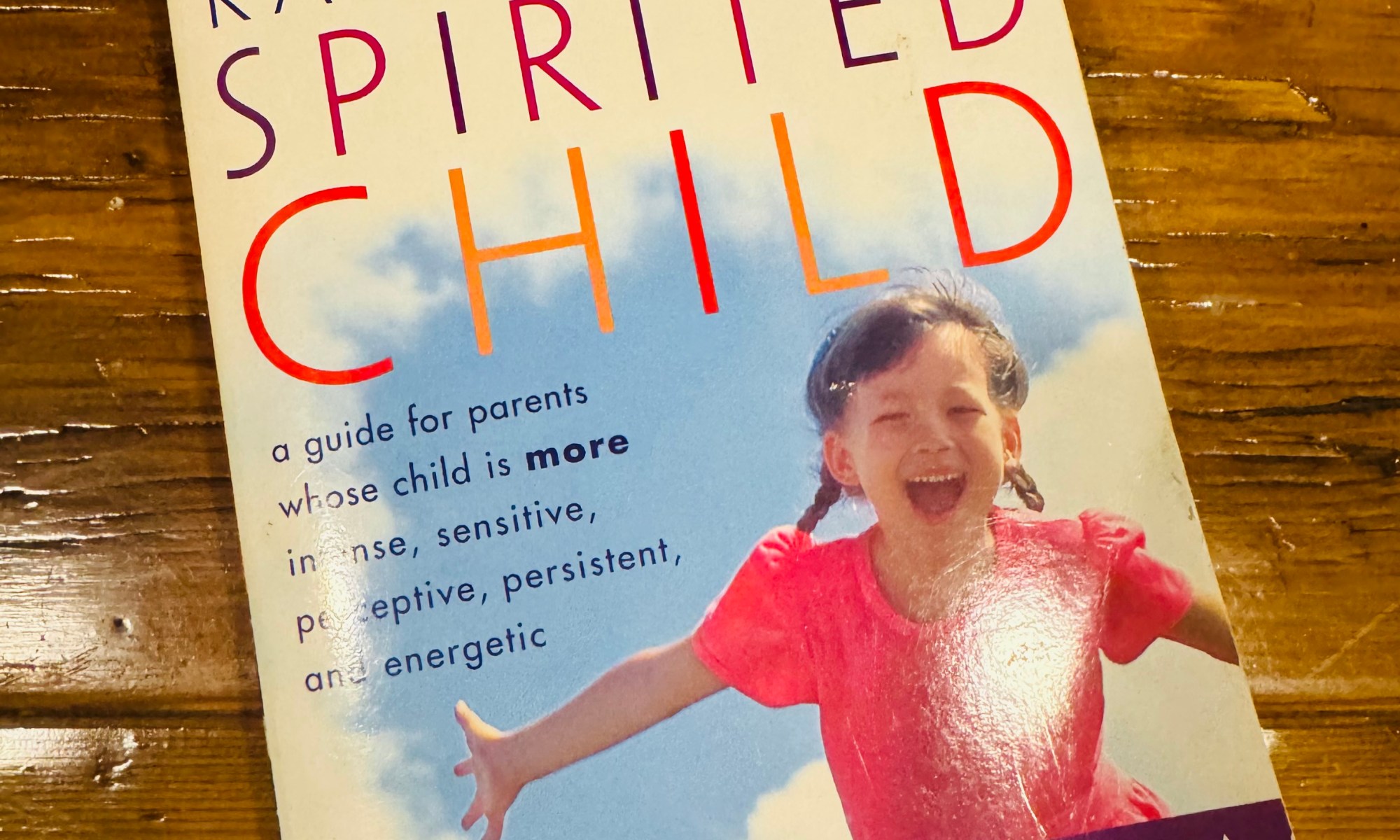
Yesterday, I found myself sitting across from my long-time play therapy supervisor—one of the most respected play therapists in Canada. At the beginning of our meeting that focuses on supervision, she offered me a few books she was no longer using. The first one she passed me was Raising Your Spirited Child. I looked at her and said, “This is a full circle moment.” Let me explain why.

When Wesley was an infant and toddler, I knew that parenting him would be different. I often felt judged by others, like no one truly understood what I was going through. I was constantly exhausted and on high alert, trying to meet the needs of my highly sensitive, deeply feeling child.

While most people around me did not get what I was feeling or experiencing, my mother-in-law was more understanding. For her, Wesley’s energy seemed normal. Her three boys were very similar. And while that was somewhat comforting, it also made me feel worse for struggling.

To give you a picture—Wesley didn’t walk, he ran. He didn’t sit still; he was in constant motion. He craved human connection, and as a young child, that person was always me. Sleep was a battle—he took forever to fall asleep and would wake up incredibly early.

If I had been an extroverted, sensory-seeking parent who thrived on social interaction and stimulation, this kind of intensity might have felt like a perfect match. But I wasn’t. I am the kind of person that often longs for peace and quiet. I get overwhelmed by noise and crowds. I love people, but I also deeply need my alone time. Back then, undiagnosed and untreated for ADHD, I was tired—drained.

And I was also doing my PhD.

The days when I was with Wesley for long stretches were particularly difficult—not because I didn’t love being with him, but because it was just the two of us, and he thrived in highly social environments. Yet there were very few social spaces that could accommodate his energy level at that age. The mismatch between what he needed and what I could offer felt heavy, and isolating.

Even through the exhaustion, I knew my son was a gift. His intensity, his passion, his emotions—these were qualities that would one day serve him. But in those early years, they were hard on me.

As someone raised in the pre-internet era, books were always where I turned to understand the world. I devoured parenting books, but nothing seemed to fit. Until one day, I found Raising Your Spirited Child. I remember reading it and weeping. For the first time, someone saw me. Someone saw him. Not in a negative light, but through a lens that highlighted his strengths, not just the challenges.

That book was a turning point. It validated what I had always known in my gut: my son didn’t need fixing—he needed understanding. And so, did I. That moment sparked a fire in me to learn more about the diversity of children’s brains, nervous systems, temperaments, and development. It was the beginning of a new path.

So, when my supervisor—now guiding me on my journey to becoming a play therapy supervisor—handed me that very same book yesterday, I paused. It was one of those quiet, powerful nudges from the universe.

A reminder: You’re on the right path. This work is for you.

From Grief to Growth: Starting a Therapy Practice in Honour of My Dad

I’ve wanted to be a therapist for as long as I can remember.

At 16 years old, after a fight with my high school boyfriend, I scribbled a list of life goals into my diary. Right at the top were two things: become a therapist and own my own practice. This was long before I had children of my own, before I understood how life would twist and turn, and before I knew how closely my path would align with the person who inspired it all—my dad.

There were detours, of course. I pursued a doctorate in anthropology—the study of human behaviour (so not too far off track). But eventually, I returned to those original goals. Today, I am a therapist, and I do run my own practice. Looking back, I had a clear sense of direction early on—but what drew me to therapy? And why work with children?

The answer is my dad.

My dad lived an extraordinary life considering where he came from. He grew up in a home shaped by adversity: abuse, addiction, violence, incarceration, and neglect. If you’re familiar with the Adverse Childhood Experiences (ACEs) study, you’ll know that scoring high on it correlates with many poor outcomes. My dad had a perfect ACE score. That’s not the kind of test where you want full marks.

By all accounts, my dad should not have made it. But he did. He not only survived—he thrived. He worked at IBM, married my mom (his high school sweetheart), had two children, and coached many others who needed a father figure. He became the most compassionate, empathetic, and quietly courageous man I’ve ever known.

He taught me to look for people’s stories before judging them. He believed in the good in others and never gave up on anyone. He loved unconditionally. My dad once dreamed of becoming a social worker, but when he shared that with others, they laughed at him. This made me both angry and left me with deep sadness for him. Instead, he poured his heart into volunteering, friendships, and showing up for his community. He modeled what it meant to love deeply, support a strong woman (my mom), and live with unwavering loyalty and kindness.

He was also the first person who made me see the power of early intervention. When he shared stories from his childhood—especially when drinking—I saw a boy in pain, a child who had no one to help him navigate what he was living through. And I wanted to help all the other children like him.

Research tells us that someone with my dad’s background shouldn’t have lived the life he did. But he beat the odds. How? I suspect part of it was his intelligence—he was smart, resourceful, a problem-solver. Possibly neurodivergent (We’ll never know). But more than that, he had people who loved him: a grandmother he loved, loyal friends, and a partner who loved, challenged and accepted him. And he had hockey—his outlet, his escape, his lifeline. He always said hockey and my mom saved him.

Even in his final days, my dad was still helping others. He lived each day like it might be his last, and on June 10, 2020—exactly five years ago today—he ran out of days. My world cracked open. I had three young kids and an ocean of grief I didn’t know how to navigate. He had been the healthy one in comparison to others—active, social, full of life. He didn’t deserve to go, not like that. But 15 months after his pancreatic cancer diagnosis, he was gone.

And something shifted in me.

It may be the ADHD part of my brain, but after his death, I felt no fear. The anxieties that used to hold me back evaporated. I kept thinking: What if I only have 25 years left? What do I want to do with that time?

In that clarity, I created Bloom: Child & Family Therapy.

There was no hesitation. No doubt. I just knew I had to do it. Bloom was created for children like my dad—for the kids with silent struggles, hidden pain, and immense potential. It was created to honour him.

Because of my dad, I believe in the power of healing. I believe every person—no matter their past or trauma—can move forward, grow, and thrive. He taught me to be still, to listen deeply, and to see the strength in every human being. And I carry that with me into every session, every conversation, every moment I spend with a child or family.

Five years later, I still miss him every day. But I also feel him—his lessons, his love, his legacy—woven into the work I do. Bloom isn’t just a practice. It’s a tribute. To a little boy who didn’t get the help he needed. To the man he became anyway. And to the lives we can change when we believe healing is always possible.

Grief and Love: Navigating Loss on April’s Birthday

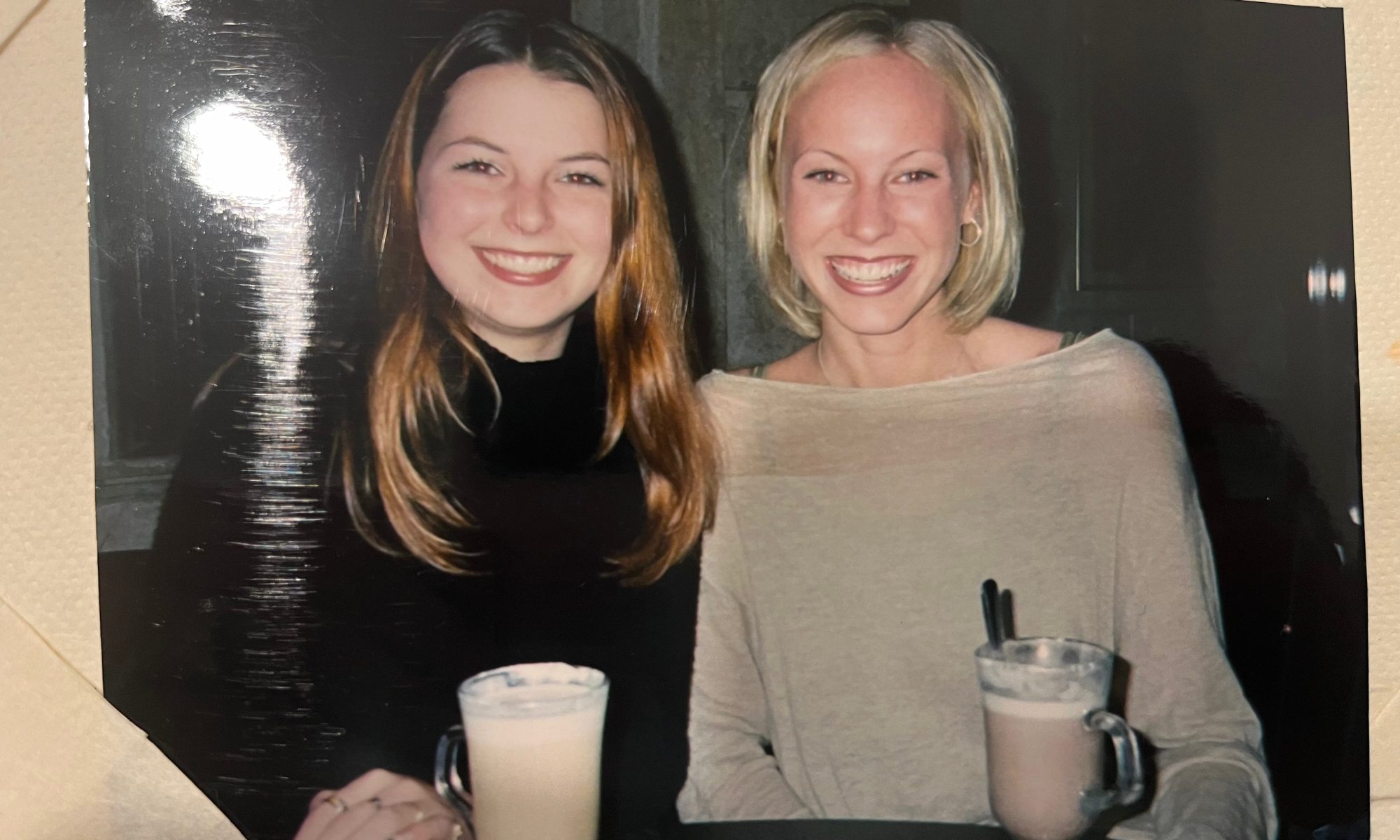
Today is my best friend April’s birthday. She was supposed to be 44 years old.

For as long as I can remember, I celebrated April’s birthday with her. No one could ever surprise April—she didn’t really like surprises. She told her family and friends exactly what she wanted, and she always had a plan for how she wanted to celebrate. I now admire that quality deeply. April always knew what she wanted—whether it was for her birthday, her career, or her family. She had a vision for her life and worked tirelessly to bring it to reality.

April’s 43rd birthday was the last time I would wish her a happy birthday. I called her that day, as I always did. She told me she was going out for dinner with her husband. She was at the salon getting highlights. She also mentioned she’d been having trouble eating certain foods and wasn’t sure how much she’d be able to eat that evening. She sent me pictures of their beautiful new home in the Bay Area, where she would live with her husband and their soon-to-be three-year-old son.

One month later, April was diagnosed with late-stage pancreatic cancer—the same illness that took my dad at 65, just a few years earlier.

Grief is different for everyone. It can shake you to your core, distort your beliefs, and make you reach for anything that feels stable. For me, grief comes in waves—some massive, some small—but each brings a deep, somatic pain. My already foggy, unfocused brain becomes even more clouded. I freeze. I go numb. Other times, I feel the ache physically—my body holding memories, replaying conversations on a loop. I question what I did or didn’t do, what I could have done differently. I feel like I wasn’t enough.

I want to reach out for support, but then I talk myself out of it—afraid I’ll be too much. I crave connection while wanting to disappear. These contradictions, already familiar from my life with ADHD, feel even more intense in grief.

Joan Didion, in The Year of Magical Thinking, writes about the year following her husband’s death. Her words resonate deeply with me. Because April lived in California, it’s strangely easy to “forget” that she’s gone. If you’ve never lost someone close, that may sound odd—but Didion captures it perfectly: the mind protects us from fully absorbing the reality of loss.

Almost every week, I see or hear something and think, I need to tell April about this. And then I remember. And the wave comes.

As my children grow, they ask questions about my own childhood—and almost every story involves April. I tell them about the two of us watching MuchMusic on our lunch breaks from school, hanging out in her basement listening to music, our proms and semi-formals, traveling to Quebec, Cuba, Mexico, living in Asia, moving into our dorm at university, decorating our student house—our rooms always side by side. Boyfriends, heartbreaks, late-night talks. So much of my early life was lived with her by my side.

And now, joy and grief arrive together. I laugh at a memory and cry at its absence.

Writing has often been my way through, and lately, my creative heart keeps returning to April. I write to her. I write about her. And somehow, in those words, I feel close to her again.

Love doesn’t disappear. It changes shape. Today, on her birthday, I feel that love so clearly. It lives on in the stories I tell, in the memories I carry, and in the deep ache of missing her.

Happy birthday, April. I miss you so deeply.