
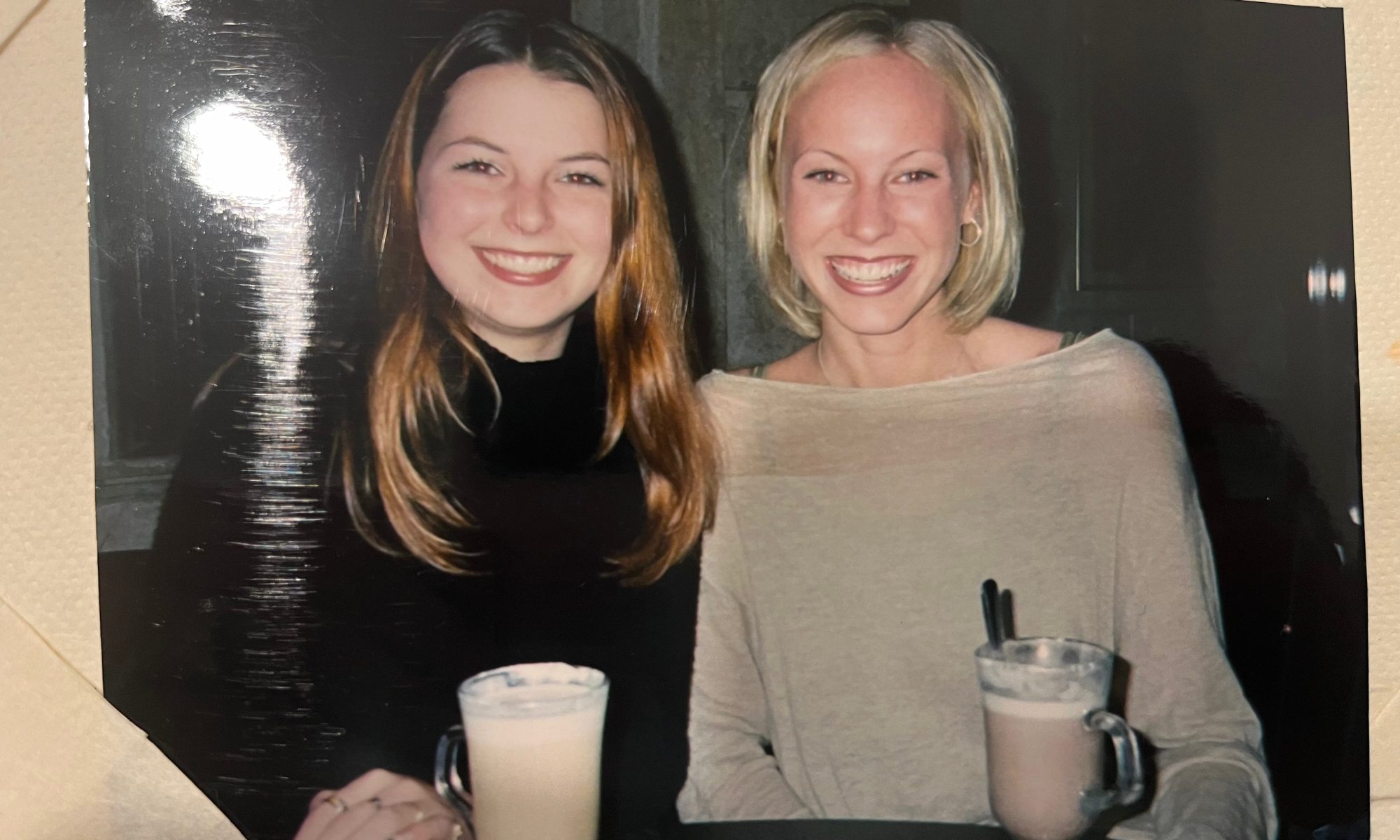
Today is my best friend April’s birthday. She was supposed to be 44 years old.
For as long as I can remember, I celebrated April’s birthday with her. No one could ever surprise April—she didn’t really like surprises. She told her family and friends exactly what she wanted, and she always had a plan for how she wanted to celebrate. I now admire that quality deeply. April always knew what she wanted—whether it was for her birthday, her career, or her family. She had a vision for her life and worked tirelessly to bring it to reality.
April’s 43rd birthday was the last time I would wish her a happy birthday. I called her that day, as I always did. She told me she was going out for dinner with her husband. She was at the salon getting highlights. She also mentioned she’d been having trouble eating certain foods and wasn’t sure how much she’d be able to eat that evening. She sent me pictures of their beautiful new home in the Bay Area, where she would live with her husband and their soon-to-be three-year-old son.
One month later, April was diagnosed with late-stage pancreatic cancer—the same illness that took my dad at 65, just a few years earlier.
Grief is different for everyone. It can shake you to your core, distort your beliefs, and make you reach for anything that feels stable. For me, grief comes in waves—some massive, some small—but each brings a deep, somatic pain. My already foggy, unfocused brain becomes even more clouded. I freeze. I go numb. Other times, I feel the ache physically—my body holding memories, replaying conversations on a loop. I question what I did or didn’t do, what I could have done differently. I feel like I wasn’t enough.
I want to reach out for support, but then I talk myself out of it—afraid I’ll be too much. I crave connection while wanting to disappear. These contradictions, already familiar from my life with ADHD, feel even more intense in grief.
Joan Didion, in The Year of Magical Thinking, writes about the year following her husband’s death. Her words resonate deeply with me. Because April lived in California, it’s strangely easy to “forget” that she’s gone. If you’ve never lost someone close, that may sound odd—but Didion captures it perfectly: the mind protects us from fully absorbing the reality of loss.
Almost every week, I see or hear something and think, I need to tell April about this. And then I remember. And the wave comes.
As my children grow, they ask questions about my own childhood—and almost every story involves April. I tell them about the two of us watching MuchMusic on our lunch breaks from school, hanging out in her basement listening to music, our proms and semi-formals, traveling to Quebec, Cuba, Mexico, living in Asia, moving into our dorm at university, decorating our student house—our rooms always side by side. Boyfriends, heartbreaks, late-night talks. So much of my early life was lived with her by my side.
And now, joy and grief arrive together. I laugh at a memory and cry at its absence.
Writing has often been my way through, and lately, my creative heart keeps returning to April. I write to her. I write about her. And somehow, in those words, I feel close to her again.
Love doesn’t disappear. It changes shape. Today, on her birthday, I feel that love so clearly. It lives on in the stories I tell, in the memories I carry, and in the deep ache of missing her.
Happy birthday, April. I miss you so deeply.
 Melissa Fellin MSW, RSW, MA, PhD, CPT